Choosing the right HR certification can feel overwhelming, especially when you’re scrolling through endless forums and getting conflicting advice. If you’re standing at this crossroads right now, wondering whether to pursue SHRM or PHR certification, you’re not alone. Thousands of HR professionals face this exact decision every year.
Let’s break down everything you need to know about these two certifications so you can make the best choice for your career.
What Are SHRM and PHR Certifications?
Before diving into comparisons, let’s understand what these certifications actually are.
SHRM certifications are offered by the Society for Human Resource Management. They include the SHRM-CP (Certified Professional) for early to mid-career HR professionals and the SHRM-SCP (Senior Certified Professional) for senior-level practitioners.
PHR certifications come from the HR Certification Institute (HRCI). The PHR (Professional in Human Resources) targets mid-level professionals, while the SPHR (Senior Professional in Human Resources) is designed for senior HR leaders.
Both organizations have been around for decades and are widely recognized across the United States and Canada. However, they take different approaches to testing and certification.
Why Are People Talking About SHRM Right Now?
If you’ve been researching certifications lately, you might have noticed some controversy surrounding SHRM. The organization recently faced legal challenges, including an employment discrimination lawsuit that raised eyebrows in the HR community. These legal issues have caused some professionals to question whether SHRM certifications still hold the same value they once did.
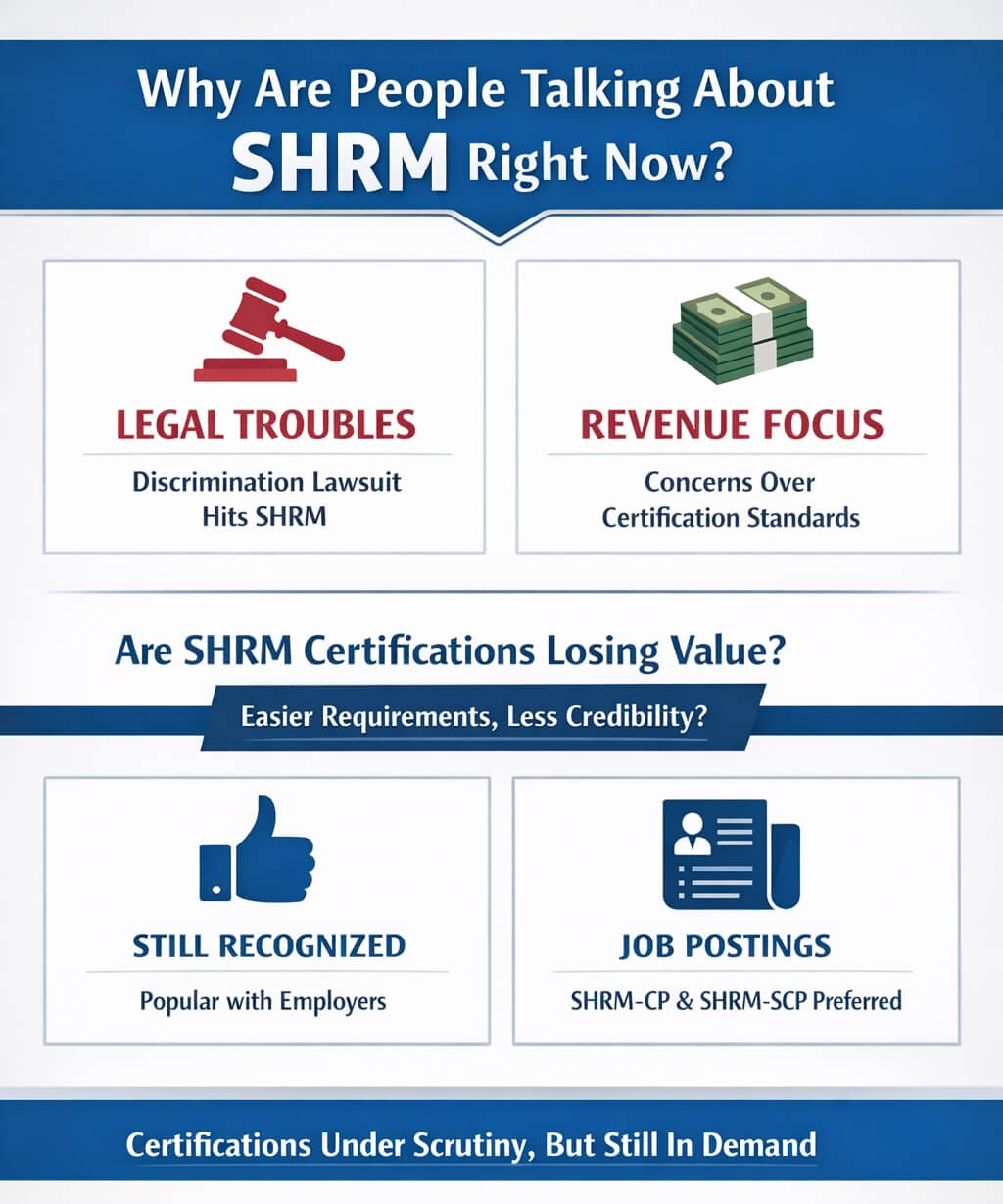
Additionally, some HR professionals have expressed concerns that SHRM has become too focused on revenue generation rather than maintaining strict certification standards. Years ago, SHRM certifications required significant work experience, but those requirements have changed over time.
However, it’s important to note that despite these concerns, SHRM certifications are still widely recognized and accepted by employers. Many companies specifically list SHRM-CP or SHRM-SCP as preferred or required qualifications in job postings.
Which Certification Do Employers Prefer?
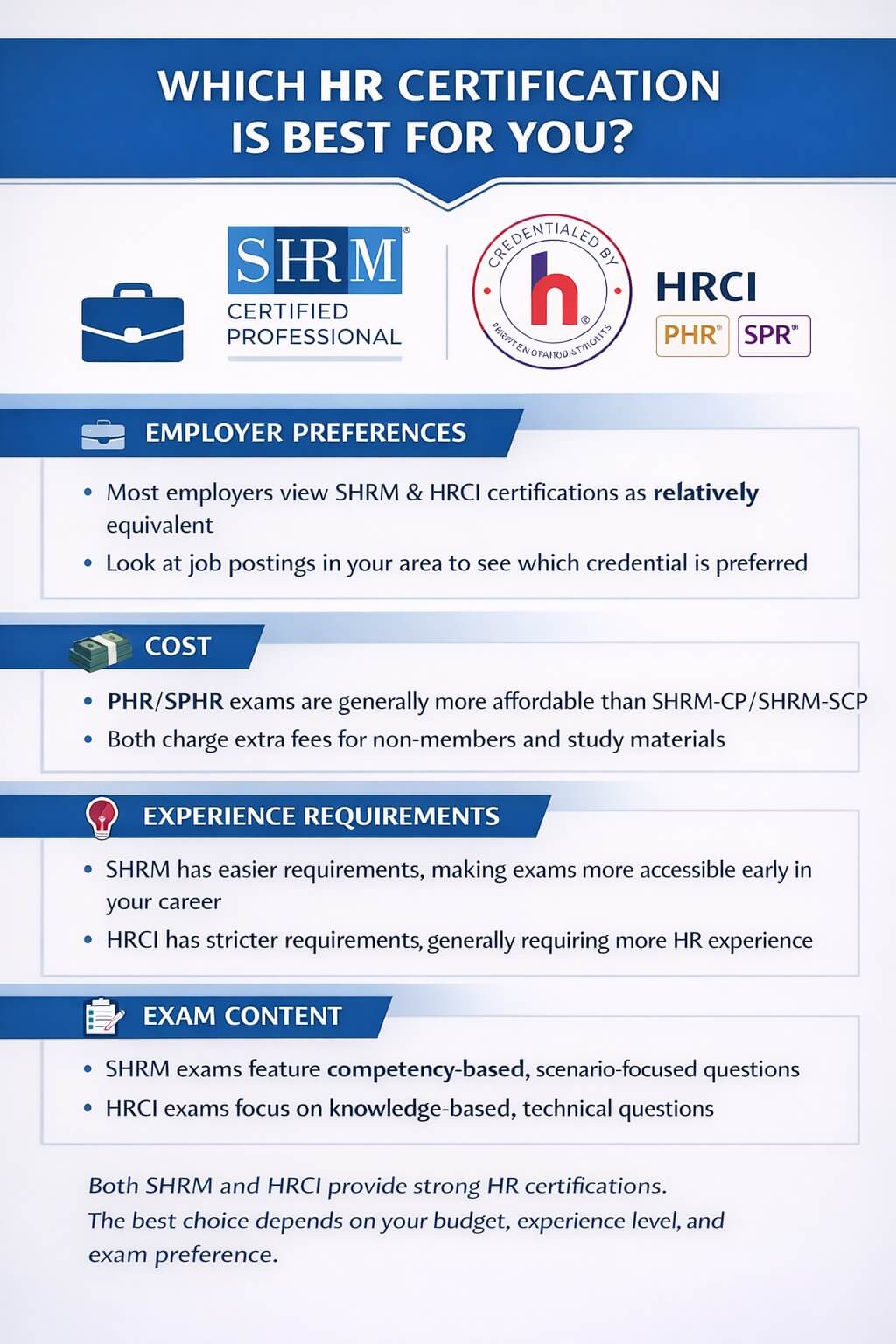
Here’s the truth: most employers don’t strongly favor one over the other. When you look at job listings across North America, you’ll typically see requirements written as “SHRM-CP/PHR” or “SHRM-SCP/SPHR.” This means employers view them as relatively equivalent.
Both certifications demonstrate that you have a solid understanding of HR principles and practices. What matters more to employers is that you have some recognized certification rather than which specific organization issued it.
That said, there are some regional differences. In certain areas or industries, one certification might be slightly more common than the other. Your best bet is to look at job postings in your specific market and see which credential appears most frequently.
Cost Comparison: Which Is More Affordable?
Budget is a real consideration when choosing a certification. Let’s talk about the price difference.
Historically, PHR and SPHR exams have been more affordable than their SHRM counterparts. The cost difference can be several hundred dollars, which matters when you’re paying out of pocket.
Here’s a rough breakdown of what you might expect to pay:
- SHRM-CP typically costs more than PHR
- SHRM-SCP typically costs more than SPHR
- Both organizations charge additional fees if you’re not a member
- Study materials and prep courses cost extra for both
If your employer is paying for your certification, cost might not be a factor. Many organizations have professional development budgets that cover certification expenses. However, if you’re self-funding your certification journey, the price difference between SHRM and HRCI options could influence your decision.
Experience Requirements: Can You Even Take the Exam?
This is where things get interesting. The two organizations have different requirements for who can sit for their exams.
SHRM has relaxed its experience requirements in recent years. You might be eligible to take the SHRM-CP with less professional HR experience than you’d need for the PHR. This makes SHRM certifications more accessible to people who are just starting their HR careers or transitioning from another field.
HRCI maintains stricter experience requirements. For the PHR, you generally need at least one year of professional HR experience if you have a master’s degree, or more years if you have less education. These requirements ensure that test-takers have practical, real-world experience to draw upon.
If you’re early in your career and don’t yet meet the PHR requirements, the SHRM-CP might be your only option right now. However, if you qualify for both, you’ll need to weigh other factors.
Exam Content and Format Differences
Both exams test your knowledge of HR principles, but they approach the material differently.
The SHRM exams focus more on competency-based questions. They want to see how you would apply HR knowledge in real-world situations. The questions often present scenarios where you need to choose the best course of action based on behavioral competencies and technical knowledge.
HRCI exams tend to be more knowledge-based. They test whether you understand HR laws, regulations, and best practices. The questions are often more straightforward and focus on technical knowledge rather than situational judgment.
Neither approach is better or worse—they’re just different. Some people find scenario-based questions easier because they can relate them to their work experience. Others prefer knowledge-based questions because they’re more concrete.
Study Materials and Preparation
Both SHRM and HRCI offer official study materials, practice exams, and preparation courses. You’ll also find plenty of third-party resources for both certifications.
The study process typically takes several months of dedicated preparation. Most successful candidates spend 2-3 months studying, though this varies based on your experience level and how much time you can dedicate to studying each week.
One advantage worth mentioning: because both certifications have been around for years, you’ll find extensive study resources, online communities, and support groups for either path you choose.
Can You Get Both Certifications?
Yes, and some HR professionals choose to do exactly that. Having both a SHRM certification and an HRCI certification can demonstrate your commitment to the profession and show that you have a well-rounded understanding of HR from multiple perspectives.
Some professionals start with one certification and add the other later in their career, especially when moving into senior-level positions. For example, you might get your SHRM-CP early in your career, then pursue your SPHR when you’re ready for senior roles.
However, maintaining multiple certifications means paying renewal fees and completing recertification requirements for both organizations. You’ll need to earn continuing education credits for each certification, which requires time and sometimes additional money.
What About Recertification Requirements?
Both certifications require recertification every three years. You’ll need to earn professional development credits through activities like attending conferences, taking courses, or participating in HR-related activities.
The recertification process is similar for both organizations, though the specific requirements and credit systems differ slightly. Make sure you understand what’s required to maintain your certification before you commit to taking the exam.
Making Your Decision: Key Factors to Consider
Now that you understand the differences, how do you choose? Consider these factors:
Your current experience level: If you don’t yet meet PHR requirements, SHRM-CP might be your path forward.
Your budget: If you’re paying out of pocket and money is tight, the PHR route might be more affordable.
Local job market: Look at job postings in your area. Which certification appears more frequently?
Learning style: Do you prefer scenario-based questions or knowledge-based questions?
Future plans: Are you planning to get both eventually? If so, which should you tackle first?
Current concerns: How important are the recent controversies surrounding SHRM to you personally?
Here’s the honest truth: both certifications are valuable and widely recognized. Despite recent controversies, SHRM certifications haven’t lost their standing in the job market. Similarly, HRCI certifications continue to be respected and sought after by employers.
The best certification for you depends on your individual circumstances—your experience level, budget, career goals, and personal preferences. Don’t get too caught up in the debate about which is “better.” Focus on which one makes the most sense for where you are right now in your career journey.
Whichever path you choose, earning an HR certification demonstrates your commitment to the profession and your dedication to professional development. That commitment matters more than the letters after your name.
Take time to research both options thoroughly, talk to HR professionals in your network, and look at job postings in your target companies. Then make the decision that feels right for your situation. You can always add another certification later if you want to expand your credentials.
The most important step is taking action. Pick the certification that works for you right now and start studying. Your future HR career is waiting, and either certification will help you get there.