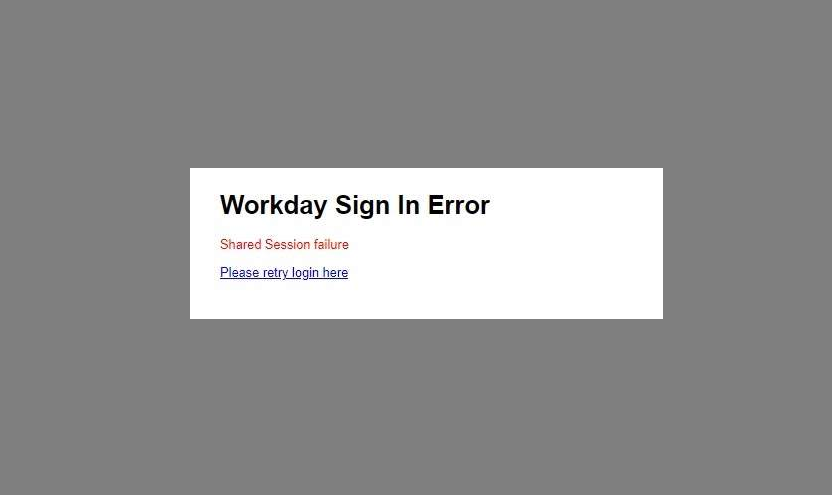
Human resource management solutions are crucial to achieving operational efficiencies. Workday is a well-liked service in this category since it provides a cloud-based platform for HR, payroll, and financial management in the workplace. But Workday, like any program, has its quirks and problems from time to time. An example of a problem that can cause disruption is a “Workday Shared Session Failure.” This page will explain what this error means, why it occurs, and how to fix it.
Recognizing a Failed Shared Session in Workday
When the Workday shared session functionality unexpectedly terminates or fails to load, it is considered a Workday Shared Session Failure. By allowing many users to log into the same Workday session at once, the shared session functionality improves teamwork and efficiency.
What Can Go Wrong in a Workday Group Meeting?
Shared sessions can fail if the internet connection is unreliable or if there are interruptions in the network. Interruptions caused by connection instability or occasional outages might lead to the breakdown of a shared session.
Because Workday is hosted in the cloud, it is vulnerable to disturbances in the server or platform, which might interrupt ongoing collaborations. Shared session failures can be caused by any number of factors, including planned maintenance, unanticipated downtime, and infrastructure technicalities.
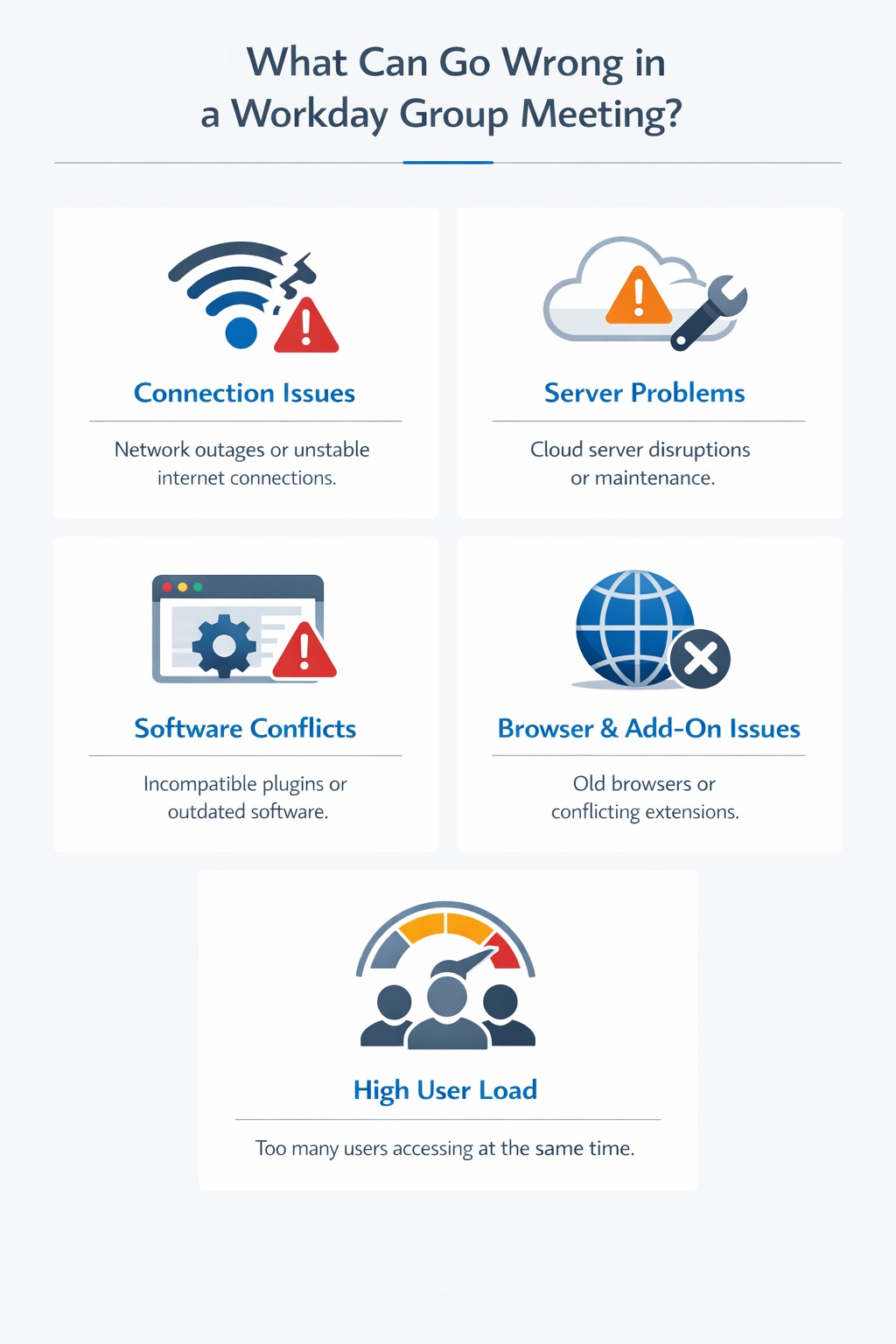
Conflicts between Workday and other programs or browser add-ons installed on a user’s device can result in failed shared sessions. Incompatible browser add-ons, out-of-date browsers, and incompatible software versions can all cause problems for the shared session feature.
The concurrent user load on the Workday servers is increased when numerous users access the same shared session at the same time. Failures in shared sessions may occur if the system is overloaded by a large number of users at once.
Prevention Strategies: How to Minimize Shared Session Failures in the Future
While troubleshooting resolves immediate issues, preventing Workday shared session failures is the best long-term approach. Organizations can significantly reduce occurrences by adopting proactive habits and configurations.
- Implement Regular Browser and Device Maintenance — Schedule monthly checks to ensure all team members use supported, up-to-date browsers (Chrome, Edge, or Firefox as recommended by Workday). Enable automatic updates and run cache/cookie cleanups via group policies in enterprise environments.
- Monitor Workday Status and Maintenance Windows — Subscribe to Workday’s official status page, community notifications, or use third-party monitoring tools like StatusGator. Plan critical shared sessions outside known maintenance periods to avoid overlap with platform updates or outages.
- Optimize Concurrent Usage — For teams with heavy collaboration needs, stagger session start times or limit simultaneous users in a single shared session. Train users to log out of inactive sessions and avoid multiple active logins across devices/browsers.
- Network and Infrastructure Best Practices — Use wired connections for important sessions when possible, deploy reliable VPNs for remote teams, and work with IT to prioritize Workday traffic (QoS settings) to reduce latency or packet loss.
- Enable Multi-Factor Authentication (MFA) Properly — Misconfigured MFA can sometimes contribute to session conflicts—ensure it’s set up per Workday’s guidelines and test it in non-production environments first.
By embedding these habits into your organization’s Workday usage policy, you can turn a reactive fix into sustained reliability.
Workarounds for Failed Workday Group Meetings
Verify your network connection and see if it is stable and of good quality. Make sure you’re connected to a stable network before attempting to use Workday. If problems with your current network persist, you may want to try a different network or ask your company’s IT department for assistance.
If you’re experiencing conflicts or compatibility issues, try clearing your browser’s cache and cookies. If you’re having trouble using Workday’s shared session feature, try disabling any unused or incompatible browser add-ons.
Always use the most recent versions of your browser and other software. The latest updates and patches typically feature stability and compatibility improvements that should be installed immediately. Check to see if the latest version of Workday is supported by your browser.
Plan shared sessions intelligently to reduce the number of users online at once. Work together to stagger user access and ease the load on the system. If the shared session option isn’t working, try using another method of collaboration.
If you’ve tried troubleshooting and your shared sessions are still failing, contact the Workday support team or your company’s IT department for assistance. They will study the problem and give solutions that are unique to your setting.
Advanced Troubleshooting: Step-by-Step Diagnostic Guide
If basic fixes (clearing cache, updating browsers, checking network) don’t resolve the issue, follow this escalated diagnostic process:
- Verify Active Sessions — Log in from a different device/browser and check for duplicate logins. Force-logout all other sessions via Workday’s security settings if available (or ask your admin to do so).
- Test in Incognito/Private Mode — Open an incognito window to rule out extension or cached data conflicts entirely.
- Check Workday System Status — Visit status.workday.com (or your tenant-specific status page) for any ongoing incidents labeled as “shared session,” login, or authentication issues.
- Review Browser Console Logs — Press F12 (Developer Tools) → Console tab during login attempt. Look for errors mentioning “session,” “authentication,” or “shared.” Screenshot and share with support.
- Try Alternative Access Methods — Use the Workday mobile app (if your organization enables it) or a different network (e.g., mobile hotspot) to isolate whether it’s device-, network-, or account-specific.
- Gather Tenant-Specific Details — Note your tenant URL, exact error timestamp, affected user roles (e.g., HR partner vs. employee), and whether it occurs company-wide or isolated.
Document findings before escalating—this speeds up resolution when contacting support.
When to Contact Workday Support: What to Provide for Faster Resolution
Persistent or widespread shared session failures often require Workday’s intervention, especially if tied to tenant configuration, outages, or backend authentication issues.
Contact your organization’s Workday administrator first (they may have direct access to community/support portals). If needed, open a case via:
- Workday Community portal (community.workday.com)
- Your tenant’s support contact
- Phone support (if your subscription includes it)
Key information to include in your ticket:
- Exact error message and screenshot
- Date/time (with timezone) when the failure started
- Affected users/roles and how many
- Browser/version/OS details
- Steps already tried (e.g., cache cleared, incognito tested)
- Whether it coincides with maintenance or high-usage periods
- Any recent changes (new integrations, security policy updates)
Workday typically responds quickly to login-related tickets, and providing this detail can reduce resolution time from days to hours.
Real-World Examples and Lessons Learned
Case 1: University-Wide Outage (2020) A major university experienced “Shared Session Failure” during peak registration. Cause: Unplanned Workday service interruption affecting authentication. Lesson: Communicate status updates quickly to users and have backup processes (e.g., manual approvals) ready.
Case 2: Enterprise Browser Conflict A global company saw repeated failures only in one department. Root cause: A newly deployed browser extension (ad-blocker/security tool) interfering with session handshakes. Lesson: Standardize browser configurations and test extensions before rollout.
Case 3: High-Load During Peak Season An HR team hit limits during open enrollment. Cause: Too many concurrent shared sessions. Lesson: Schedule staggered sessions and monitor usage patterns to predict and prevent overload.
These scenarios show that while technical fixes help, organizational planning and awareness often prevent recurrence.
Frustratingly, a broken Workday shared session can disrupt an organization’s human resource management. Businesses can prevent and remedy shared session failures if they learn to identify potential causes and put those causes to work. Organizations can reap the full benefits of Workday’s collaborative features and guarantee uninterrupted productivity by taking preventative measures like updating software and browsers, keeping the network connection solid, and planning shared sessions in advance.
One thought on “Workday Shared Session Failure Meaning: Causes and Solutions”